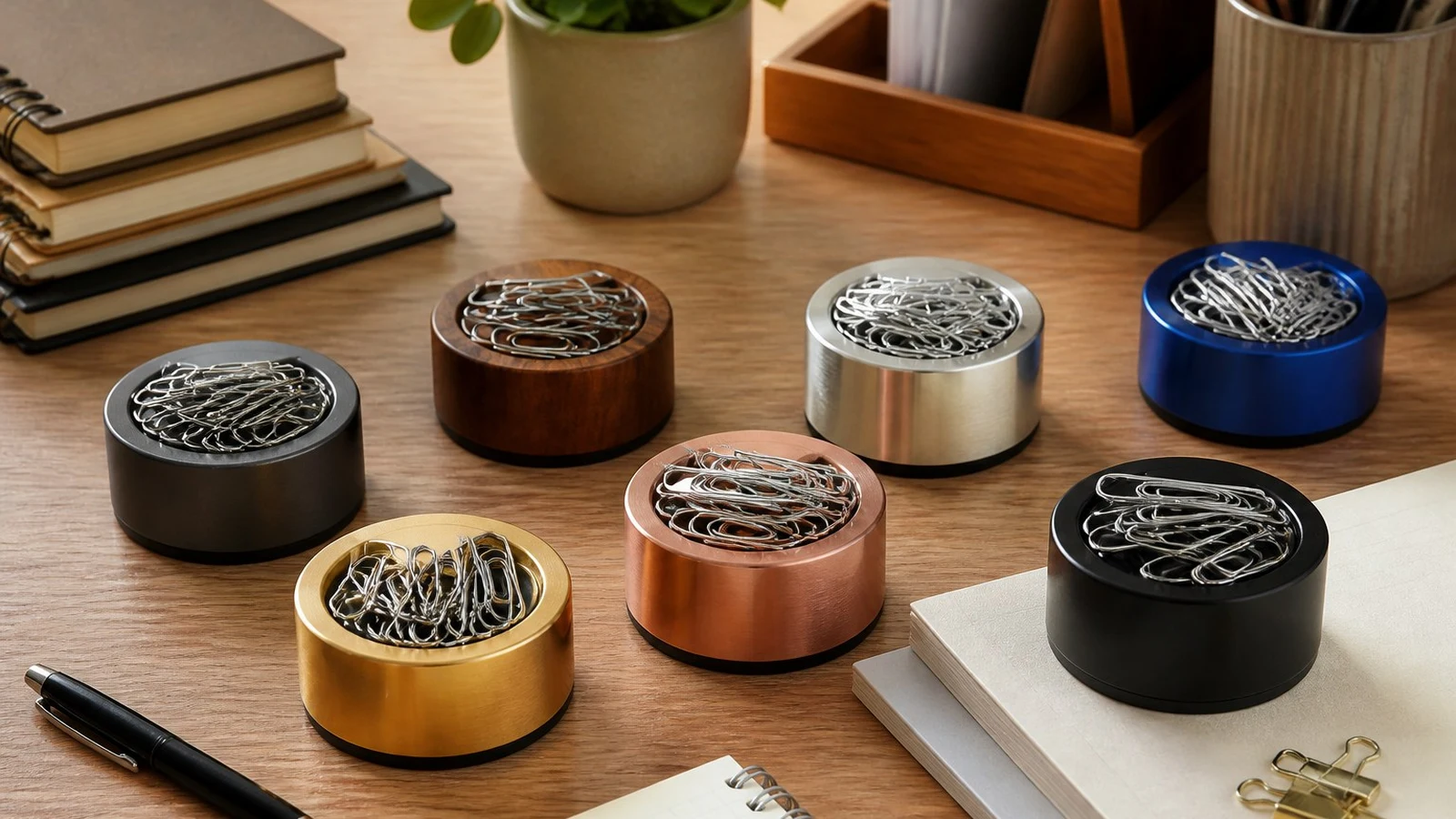
What this desk holder needs to solve
The first job is simple: keep small metal clips and paperwork supplies easy to reach without making the desk look crowded. Use this guide alongside the current LeStallion comparison of paper clip holders with magnetic base when you want a product shortlist, then use the field checks here to judge fit, handling, and day-to-day upkeep in your own workspace.
Desk placement checks
Main review angle: compare dispenser holders by visibility, clip access, stability, and update rhythm. Start with a paper footprint, not a product photo. Mark the width of the magnetic cup, the clearance needed to reach into it, and the space reserved for a phone or sign-in pad. The footprint envelope tells you whether the holder can sit in the desk user's natural reach without crowding receipts, badges, or appointment reminders. Load it with real sample clips, including small, jumbo, and coated clips, then check whether the cup and magnet bow or hide the bottom line of contact details. A useful holder leaves a small margin around every compartment so staff can add or remove notes without bending corners. Keep a record of clearance audit so the decision is based on observed desk behavior rather than a capacity claim.
For sizing, the quiet failure is overhang. A base can look compact until the clip pile crowds a monitor stand, brochure rack, or payment terminal. Review reach zone by using the unit from both sides of the desk and watching the nearest obstacle. If a coworker must tilt the holder to reach the back clips, it is too large for that station. Choose the capacity that fits the counter today, plus a modest reserve, rather than the deepest cup that forces everything else to move. Keep a record of replacement margin so the decision is based on observed desk behavior rather than a capacity claim.
Clip access and visibility
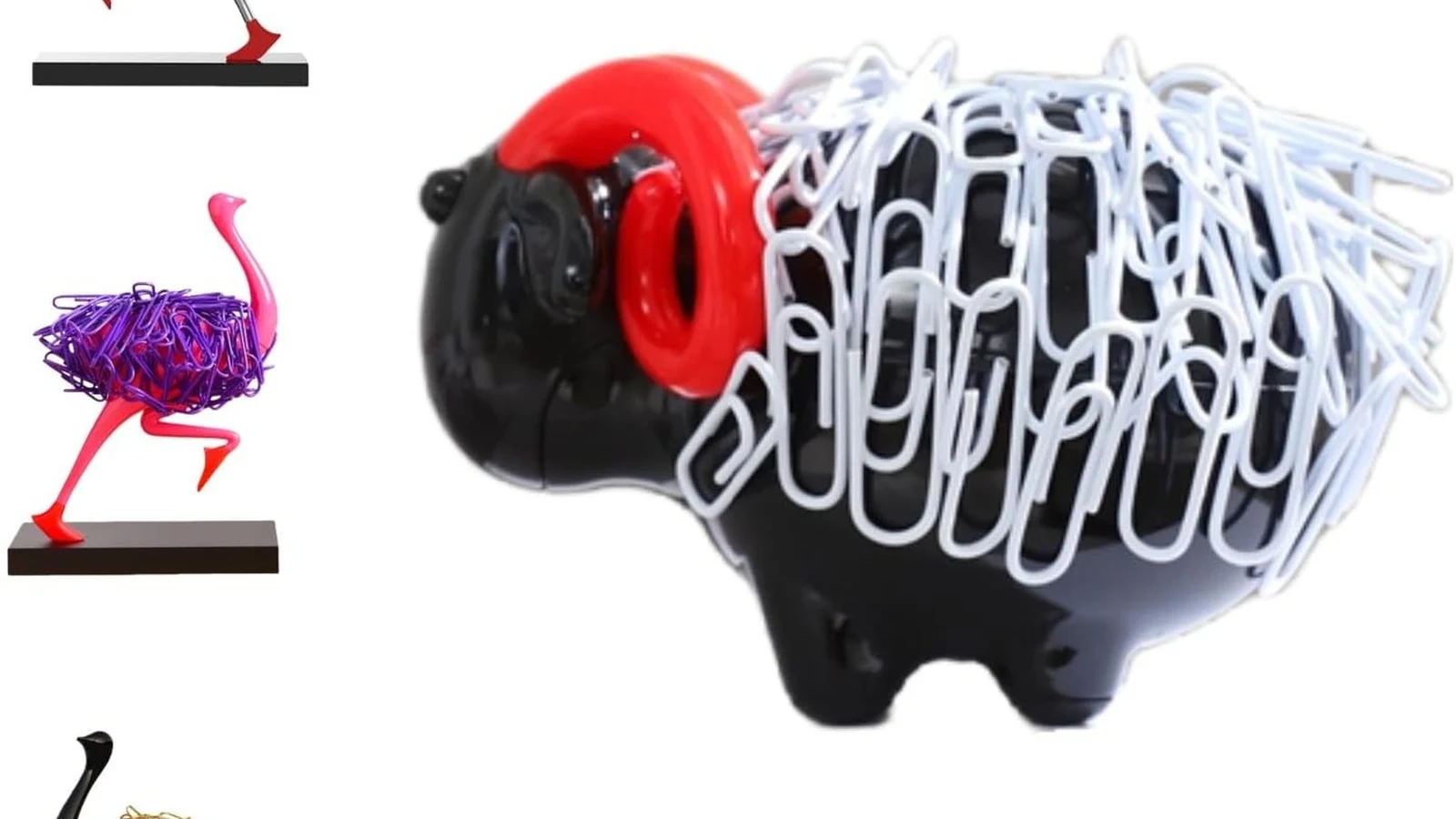
Workflow quality shows up during interruptions. Test counter zones with a delivery driver at the counter, a client waiting to schedule, and another person using the payment terminal. A good desktop clip holder remains visible but does not become the center of the workspace. Keep high-demand clip sizes at the easiest reach, separate bent clips before they snag papers, and assign one person to refill the cup before the display becomes confusing. Keep a record of restock rhythm so the decision is based on observed desk behavior rather than a capacity claim.
A second pass should be done during a normal workday, not on an empty desk. Think about the moment when a desk user asks for a clip while a staff member is still finishing a sentence. The dispenser should answer that request without a drawer search or a stack of loose clips sliding across the counter. Use the staff ownership to decide who owns the display, when clips are refilled, and which side faces the public during busy periods. The best layout lets staff point once and keep the conversation moving. Keep a record of after-hours order so the decision is based on observed desk behavior rather than a capacity claim.
Staff update routine
Field check 3: Specs matter when they change the feel of daily handling. The cup material should release clips without a scraping sound, the cup and magnet should accept the clip sizes your team actually uses, and the dividers should stay readable under office lighting. Do not judge compatibility from stated capacity alone; mix small clips, jumbo clips, and a few coated clips, then lift a clip fast enough to mimic a hurried desk user. Keep a record of label contrast so the decision is based on observed desk behavior rather than a capacity claim.
Review drawer stop as a maintenance clue. Accessible bowls and removable cups, visible clip area, a weighted base, and a stop that does not slam are all practical features. If the unit depends on proprietary clip sizes that are hard to source, the first rusted cup edge can shorten its useful life. A compatible holder is one that can absorb staff changes, refilled supplies, and mixed clip batches without becoming stiff or messy. Keep a record of bearing feel so the decision is based on observed desk behavior rather than a capacity claim.
Desk-user-side testing
Durability is mostly about small repeated motions. Watch cleaning products after several quick uses: clips should not snag, rims should not scratch, and the base should not loosen. Build a monthly routine around emptying one section, wiping cup and magnet with a safe cloth, checking for cracked compartments, and replacing bent clips. The right holder is the one staff will maintain because the task takes minutes, not an afternoon. Keep a record of dust schedule so the decision is based on observed desk behavior rather than a capacity claim.
A second pass should be done during a normal workday, not on an empty desk. A clip holder lives under fingertips, paper dust, and the occasional coffee splash. The base inspection should be easy to wipe without removing every clip. Check whether fingerprints show on the cup and magnet, whether dust gathers around the spindle, and whether the base has seams that trap crumbs. A simple cleaning path matters because a dirty holder makes even good paper clips look neglected. Keep a record of fingerprint control so the decision is based on observed desk behavior rather than a capacity claim.
Quick check: desk-user-side testing
Write down three observations before deciding: who uses the dispenser, which clip size is searched for most often, and whether the holder stays in the same position after repeated use. This keeps the decision tied to a real desk workflow rather than a product photo.
Buying signals that matter
Field check 5: Treat the first week like an acceptance test. The return inspection is a yes-or-no signal: does the holder wobble, does the first clip stay visible, and can a coworker find the right clip size without help? If any answer is unclear, do not excuse it as a setup issue. A public-facing clip holder has to communicate instantly because desk users rarely study it patiently. Keep a record of clip visibility so the decision is based on observed desk behavior rather than a capacity claim.
Red flags are easier to catch when you write them down. During wobble test, note tight cup and magnet, glare on glossy cups, clips hidden under neighboring supplies, and any base that drifts when turned. Also check the return window before adding every clip. A holder that fails a quick counter trial will only become more frustrating after staff changes, reprints, and everyday dust. Keep a record of magnet drag so the decision is based on observed desk behavior rather than a capacity claim.
Mistakes to avoid
A real scenario exposes details that a clean product shot hides. In salon counter, the holder may share space with intake forms, loyalty cards, appointment reminders, and seasonal notices. The holder works when it gives each clip type a stable home and lets staff refill one compartment at a time. If customers keep asking which clip to use, the order, labels, or desk position needs to change before the product choice is blamed. Keep a record of agency lobby so the decision is based on observed desk behavior rather than a capacity claim.
A second pass should be done during a normal workday, not on an empty desk. Picture a small service counter with a scheduler, a form stack, a bowl of pens, and three people trying to leave with the right contact. In that setting, the seasonal update is not decorative; it guides the next step. Put the most requested clips at the front, reserve a clearly labeled section for specialists, and keep the dispenser close enough for desk users to browse without reaching across private paperwork. Keep a record of repair shop so the decision is based on observed desk behavior rather than a capacity claim.
At the midpoint, compare those observations with the product details in the LeStallion magnetic paper clip holder review; the useful match is the one that supports your clip count, counter depth, and update schedule without adding visual clutter.
Final desk rehearsal
Field check 7: Start with a paper footprint, not a product photo. Mark the width of the magnetic cup, the clearance needed to reach into it, and the space reserved for a phone or sign-in pad. The desk neighbor map tells you whether the holder can sit in the desk user's natural reach without crowding receipts, badges, or appointment reminders. Load it with real sample clips, including small, jumbo, and coated clips, then check whether the cup and magnet bow or hide the bottom line of contact details. A useful holder leaves a small margin around every compartment so staff can add or remove notes without bending corners. Keep a record of reach zone so the decision is based on observed desk behavior rather than a capacity claim.
For sizing, the quiet failure is overhang. A base can look compact until the clip pile crowds a monitor stand, brochure rack, or payment terminal. Review magnetic cup width checks by using the unit from both sides of the desk and watching the nearest obstacle. If a coworker must tilt the holder to reach the back clips, it is too large for that station. Choose the capacity that fits the counter today, plus a modest reserve, rather than the deepest cup that forces everything else to move. Keep a record of clearance audit so the decision is based on observed desk behavior rather than a capacity claim.
Acceptance findings
Workflow quality shows up during interruptions. Test staff ownership with a delivery driver at the counter, a client waiting to schedule, and another person using the payment terminal. A good desktop clip holder remains visible but does not become the center of the workspace. Keep high-demand clip sizes at the easiest reach, separate bent clips before they snag papers, and assign one person to refill the cup before the display becomes confusing. Keep a record of desk user cue so the decision is based on observed desk behavior rather than a capacity claim.
A second pass should be done during a normal workday, not on an empty desk. Think about the moment when a desk user asks for a clip while a staff member is still finishing a sentence. The dispenser should answer that request without a drawer search or a stack of loose clips sliding across the counter. Use the conversation pause to decide who owns the display, when clips are refilled, and which side faces the public during busy periods. The best layout lets staff point once and keep the conversation moving. Keep a record of restock rhythm so the decision is based on observed desk behavior rather than a capacity claim.
Quick check: acceptance findings
Write down three observations before deciding: who uses the dispenser, which clip size is searched for most often, and whether the holder stays in the same position after repeated use. This keeps the decision tied to a real desk workflow rather than a product photo.
Long-term ownership
Field check 9: Specs matter when they change the feel of daily handling. The index dividers should release clips without a scraping sound, the cup and magnet should accept the clip sizes your team actually uses, and the dividers should stay readable under office lighting. Do not judge compatibility from stated capacity alone; mix small clips, jumbo clips, and a few coated clips, then lift a clip fast enough to mimic a hurried desk user. Keep a record of drawer stop so the decision is based on observed desk behavior rather than a capacity claim.
Review clip gauge mix as a maintenance clue. Accessible bowls and removable cups, visible clip area, a weighted base, and a stop that does not slam are all practical features. If the unit depends on proprietary clip sizes that are hard to source, the first rusted cup edge can shorten its useful life. A compatible holder is one that can absorb staff changes, refilled supplies, and mixed clip batches without becoming stiff or messy. Keep a record of label contrast so the decision is based on observed desk behavior rather than a capacity claim.
Layout examples
Durability is mostly about small repeated motions. Watch base inspection after several quick uses: clips should not snag, rims should not scratch, and the base should not loosen. Build a monthly routine around emptying one section, wiping cup and magnet with a safe cloth, checking for cracked compartments, and replacing bent clips. The right holder is the one staff will maintain because the task takes minutes, not an afternoon. Keep a record of wear log so the decision is based on observed desk behavior rather than a capacity claim.
A second pass should be done during a normal workday, not on an empty desk. A clip holder lives under fingertips, paper dust, and the occasional coffee splash. The divider repair should be easy to wipe without removing every clip. Check whether fingerprints show on the cup and magnet, whether dust gathers around the spindle, and whether the base has seams that trap crumbs. A simple cleaning path matters because a dirty holder makes even good paper clips look neglected. Keep a record of dust schedule so the decision is based on observed desk behavior rather than a capacity claim.
Comparison reminders
Field check 11: Treat the first week like an acceptance test. The capacity truth is a yes-or-no signal: does the holder wobble, does the first clip stay visible, and can a coworker find the right clip size without help? If any answer is unclear, do not excuse it as a setup issue. A public-facing clip holder has to communicate instantly because desk users rarely study it patiently. Keep a record of wobble test so the decision is based on observed desk behavior rather than a capacity claim.
Red flags are easier to catch when you write them down. During failure signs, note tight cup and magnet, glare on glossy cups, clips hidden under neighboring supplies, and any base that drifts when turned. Also check the return window before adding every clip. A holder that fails a quick counter trial will only become more frustrating after staff changes, reprints, and everyday dust. Keep a record of clip visibility so the decision is based on observed desk behavior rather than a capacity claim.
Practical conclusion
A real scenario exposes details that a clean product shot hides. In seasonal update, the holder may share space with intake forms, loyalty cards, appointment reminders, and seasonal notices. The holder works when it gives each clip type a stable home and lets staff refill one compartment at a time. If customers keep asking which clip to use, the order, labels, or desk position needs to change before the product choice is blamed. Keep a record of clinic desk so the decision is based on observed desk behavior rather than a capacity claim.
A second pass should be done during a normal workday, not on an empty desk. Picture a small service counter with a scheduler, a form stack, a bowl of pens, and three people trying to leave with the right contact. In that setting, the shared suite is not decorative; it guides the next step. Put the most requested clips at the front, reserve a clearly labeled section for specialists, and keep the dispenser close enough for desk users to browse without reaching across private paperwork. Keep a record of agency lobby so the decision is based on observed desk behavior rather than a capacity claim.
Related cloud desk-organization reference
For a neighboring clip-storage format, keep the previous field check on desktop sticky-note dispensers with storage near the bottom of the research path. It is a different storage style, but it helps compare card-display carousels with a clip-and-supply station.