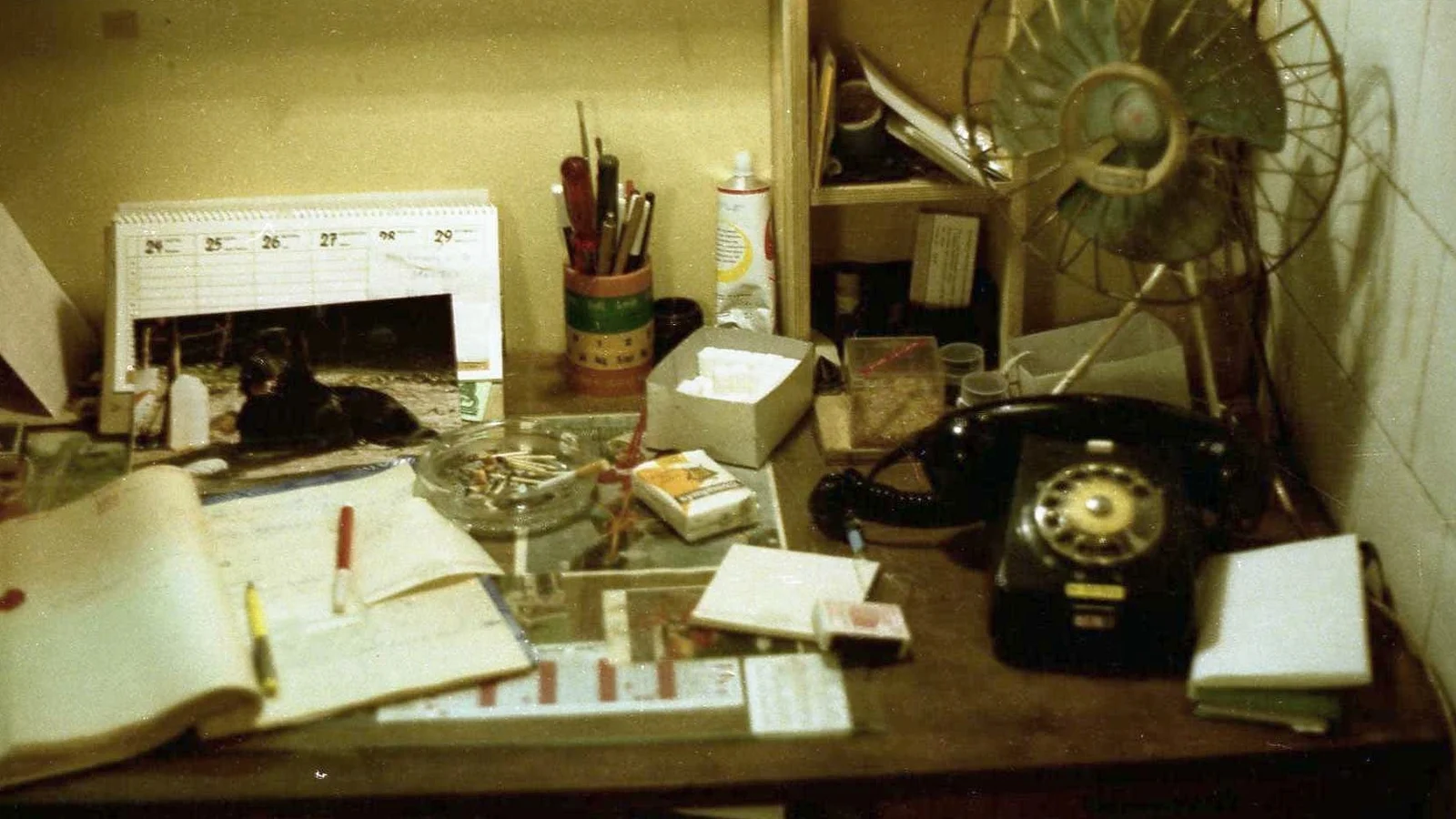
Begin with the air path, not the product photo. A remote-control desktop fan only feels useful when it fits the desk without blowing papers away, blocking a monitor, crowding a mug, or forcing the user to reach behind equipment.
Measure the air path
Measure fan diameter against monitor height so the airflow clears the screen edge without sending wind straight into eyes.
Check base and clip options
Place paper templates for the base and swing path before buying; this exposes whether a round base will crowd a keyboard, mug, or notebook.
Protect paper and screens
Check shelf clearance if the fan sits above the desk, because downward airflow can be useful while a low shelf can trap warm air.
CTA after fit
A clip base needs a flat, strong edge, not just any visible ledge. Thin shelves, glass tops, and soft dividers may not hold steady.
Bottom chain note
Cord routing should leave the mouse and keyboard lanes untouched. A remote fan is still annoying if the power cable crosses the main hand path.
For dual-monitor desks, test whether one fan can cool the seated zone or whether it hides behind a display and only cools plastic bezels.
The CTA should come after measurement: compare the LeStallion remote-control desktop fan picks only after the desk has a real width, height, and cord plan.
Close the page by keeping the previous support chain at the bottom: the articulating keyboard arm workstation note is related desk-fit context, not fan placement advice.
Monitor corner measurement: Place the fan template beside the real screen, papers, cup, and charger, then mark whether fit improves the desk without stealing clearance. Fit record 1 remains about clearance and stable placement only.
Monitor corner measurement Fit follow-up: save the measurement after the first week, because clearance habits appear after paper work, cup placement, charger use, and normal chair movement. The placement note should say which object moved, which clearance improved, and which desk shape would reject the fan.
Shelf height rehearsal: Place the fan template beside the real screen, papers, cup, and charger, then mark whether fit improves the desk without stealing clearance. Fit record 2 remains about clearance and stable placement only.
Shelf height rehearsal Fit follow-up: save the measurement after the first week, because clearance habits appear after paper work, cup placement, charger use, and normal chair movement. The placement note should say which object moved, which clearance improved, and which desk shape would reject the fan.
Paper flutter test: Place the fan template beside the real screen, papers, cup, and charger, then mark whether fit improves the desk without stealing clearance. Fit record 3 remains about clearance and stable placement only.
Paper flutter test Fit follow-up: save the measurement after the first week, because clearance habits appear after paper work, cup placement, charger use, and normal chair movement. The placement note should say which object moved, which clearance improved, and which desk shape would reject the fan.
Cord path sketch: Place the fan template beside the real screen, papers, cup, and charger, then mark whether fit improves the desk without stealing clearance. Fit record 4 remains about clearance and stable placement only.
Cord path sketch Fit follow-up: save the measurement after the first week, because clearance habits appear after paper work, cup placement, charger use, and normal chair movement. The placement note should say which object moved, which clearance improved, and which desk shape would reject the fan.
Base wobble check: Place the fan template beside the real screen, papers, cup, and charger, then mark whether fit improves the desk without stealing clearance. Fit record 5 remains about clearance and stable placement only.
Base wobble check Fit follow-up: save the measurement after the first week, because clearance habits appear after paper work, cup placement, charger use, and normal chair movement. The placement note should say which object moved, which clearance improved, and which desk shape would reject the fan.
Clip edge pressure: Place the fan template beside the real screen, papers, cup, and charger, then mark whether fit improves the desk without stealing clearance. Fit record 6 remains about clearance and stable placement only.
Clip edge pressure Fit follow-up: save the measurement after the first week, because clearance habits appear after paper work, cup placement, charger use, and normal chair movement. The placement note should say which object moved, which clearance improved, and which desk shape would reject the fan.
Mug clearance: Place the fan template beside the real screen, papers, cup, and charger, then mark whether fit improves the desk without stealing clearance. Fit record 7 remains about clearance and stable placement only.
Mug clearance Fit follow-up: save the measurement after the first week, because clearance habits appear after paper work, cup placement, charger use, and normal chair movement. The placement note should say which object moved, which clearance improved, and which desk shape would reject the fan.
Keyboard lane: Place the fan template beside the real screen, papers, cup, and charger, then mark whether fit improves the desk without stealing clearance. Fit record 8 remains about clearance and stable placement only.
Keyboard lane Fit follow-up: save the measurement after the first week, because clearance habits appear after paper work, cup placement, charger use, and normal chair movement. The placement note should say which object moved, which clearance improved, and which desk shape would reject the fan.
Screen glare position: Place the fan template beside the real screen, papers, cup, and charger, then mark whether fit improves the desk without stealing clearance. Fit record 9 remains about clearance and stable placement only.
Screen glare position Fit follow-up: save the measurement after the first week, because clearance habits appear after paper work, cup placement, charger use, and normal chair movement. The placement note should say which object moved, which clearance improved, and which desk shape would reject the fan.
Return storage spot: Place the fan template beside the real screen, papers, cup, and charger, then mark whether fit improves the desk without stealing clearance. Fit record 10 remains about clearance and stable placement only.
Return storage spot Fit follow-up: save the measurement after the first week, because clearance habits appear after paper work, cup placement, charger use, and normal chair movement. The placement note should say which object moved, which clearance improved, and which desk shape would reject the fan.
Chair exit path: Place the fan template beside the real screen, papers, cup, and charger, then mark whether fit improves the desk without stealing clearance. Fit record 11 remains about clearance and stable placement only.
Chair exit path Fit follow-up: save the measurement after the first week, because clearance habits appear after paper work, cup placement, charger use, and normal chair movement. The placement note should say which object moved, which clearance improved, and which desk shape would reject the fan.
Remote sight line: Place the fan template beside the real screen, papers, cup, and charger, then mark whether fit improves the desk without stealing clearance. Fit record 12 remains about clearance and stable placement only.
Remote sight line Fit follow-up: save the measurement after the first week, because clearance habits appear after paper work, cup placement, charger use, and normal chair movement. The placement note should say which object moved, which clearance improved, and which desk shape would reject the fan.
Low-speed angle: Place the fan template beside the real screen, papers, cup, and charger, then mark whether fit improves the desk without stealing clearance. Fit record 13 remains about clearance and stable placement only.
Low-speed angle Fit follow-up: save the measurement after the first week, because clearance habits appear after paper work, cup placement, charger use, and normal chair movement. The placement note should say which object moved, which clearance improved, and which desk shape would reject the fan.
Desk plant distance: Place the fan template beside the real screen, papers, cup, and charger, then mark whether fit improves the desk without stealing clearance. Fit record 14 remains about clearance and stable placement only.
Desk plant distance Fit follow-up: save the measurement after the first week, because clearance habits appear after paper work, cup placement, charger use, and normal chair movement. The placement note should say which object moved, which clearance improved, and which desk shape would reject the fan.
Warm laptop pocket: Place the fan template beside the real screen, papers, cup, and charger, then mark whether fit improves the desk without stealing clearance. Fit record 15 remains about clearance and stable placement only.
Warm laptop pocket Fit follow-up: save the measurement after the first week, because clearance habits appear after paper work, cup placement, charger use, and normal chair movement. The placement note should say which object moved, which clearance improved, and which desk shape would reject the fan.
Winter storage: Place the fan template beside the real screen, papers, cup, and charger, then mark whether fit improves the desk without stealing clearance. Fit record 16 remains about clearance and stable placement only.
Winter storage Fit follow-up: save the measurement after the first week, because clearance habits appear after paper work, cup placement, charger use, and normal chair movement. The placement note should say which object moved, which clearance improved, and which desk shape would reject the fan.
Second product check
Before finalizing placement, revisit the LeStallion desktop fans with remote control guide with exact desk measurements in hand.
Conclusion
Fit succeeds when the fan disappears into the desk geometry instead of becoming another object to work around.