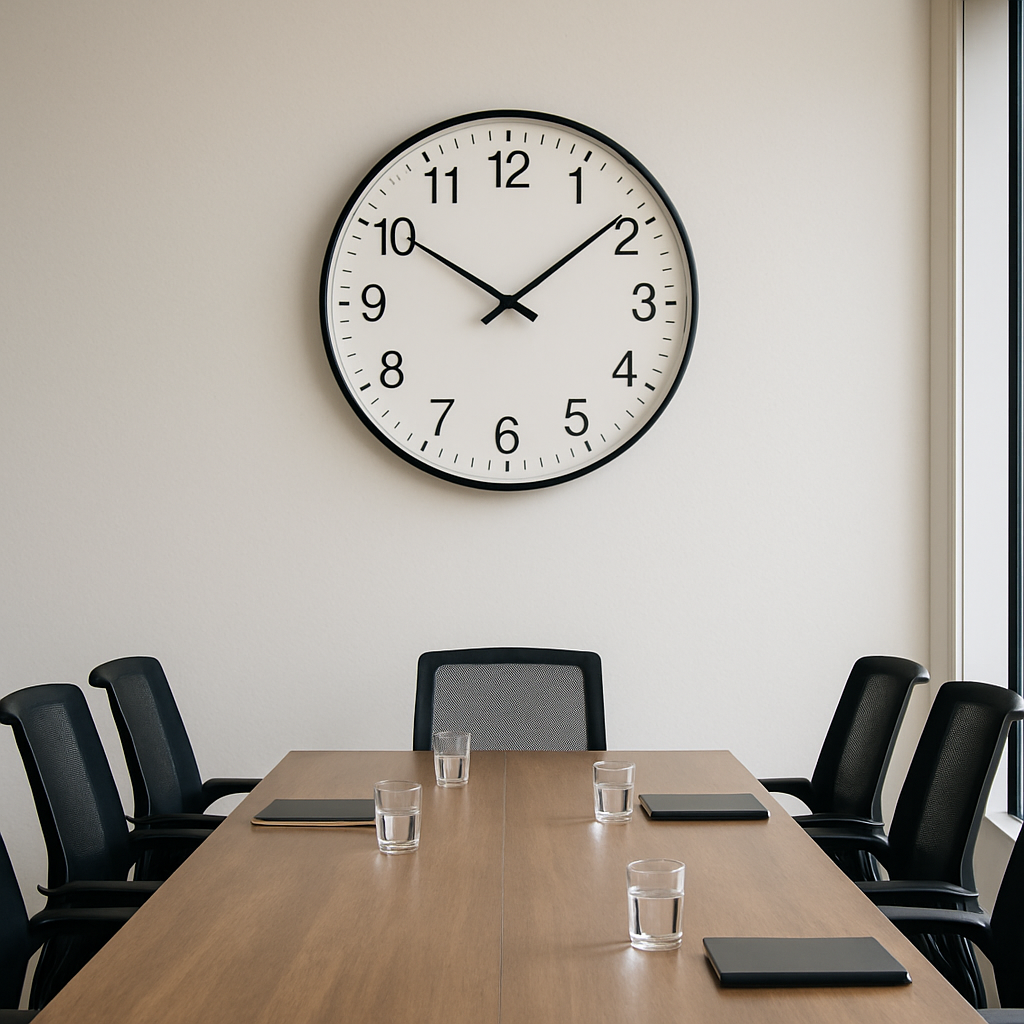
Style Match: what to check first
Style Match matters because a conference-room wall clock has to serve people at different distances, angles, and attention levels. It is not only decoration. A useful clock helps meetings start on time, keeps presenters aware of pace, and lets people check the room schedule without pulling out a phone.
Start with viewing distance. A small clock that looks elegant up close can disappear across a meeting table. Large numerals, strong contrast, and a simple face usually matter more than decorative details when the clock is meant for shared rooms.
Movement noise deserves attention. A ticking clock may be harmless in a hallway and distracting in a quiet conference room, recording room, coaching office, or focus space. Silent sweep or quiet movement can make the room feel calmer during long discussions.
Battery access and mounting are practical details. The clock should hang securely, stay level, and allow battery changes without turning maintenance into a ladder project. If the room is frequently rearranged, placement should avoid glare, projector screens, and camera sight lines.
Style still matters because conference rooms represent the office. A clock should match the room tone without becoming the focal point. Neutral frames, readable faces, and calm materials usually work better than novelty designs.
The best choice supports meeting rhythm. It is easy to read, quiet, appropriately sized, and simple to maintain. Once those basics are handled, product comparisons become much easier.
For shortlist-level product ideas, compare the 7 Best Wall Clocks for Conference Rooms.
Fit it into a real room routine
Room planning for style match matters because a conference-room wall clock has to serve people at different distances, angles, and attention levels. It is not only decoration. A useful clock helps meetings start on time, keeps presenters aware of pace, and lets people check the room schedule without pulling out a phone.
Start with viewing distance. A small clock that looks elegant up close can disappear across a meeting table. Large numerals, strong contrast, and a simple face usually matter more than decorative details when the clock is meant for shared rooms.
Movement noise deserves attention. A ticking clock may be harmless in a hallway and distracting in a quiet conference room, recording room, coaching office, or focus space. Silent sweep or quiet movement can make the room feel calmer during long discussions.
Battery access and mounting are practical details. The clock should hang securely, stay level, and allow battery changes without turning maintenance into a ladder project. If the room is frequently rearranged, placement should avoid glare, projector screens, and camera sight lines.
Style still matters because conference rooms represent the office. A clock should match the room tone without becoming the focal point. Neutral frames, readable faces, and calm materials usually work better than novelty designs.
The best choice supports meeting rhythm. It is easy to read, quiet, appropriately sized, and simple to maintain. Once those basics are handled, product comparisons become much easier.
Long-term room fit
A conference-room clock should still make sense after furniture changes, new displays, or different meeting habits. Choose a position that remains visible when chairs move and when people stand to present. Avoid placing the clock where a screen, camera, or tall cabinet will compete with it.
Maintenance should be boring. Keep a spare battery type with office supplies, note the mounting height, and choose a face that can be dusted easily. The simpler the routine, the more likely the clock stays accurate and presentable.
When style should step back
Decorative clocks can look appealing in close-up photos, but conference rooms reward clarity. Thin hands, pale numbers, mirrored faces, and busy dial art can all make the clock harder to use. If the room hosts clients, training, or presentations, readability is the professional choice.
Use style after function. A frame can match the room finish, but the clock face should be simple enough to read in one glance.
Final setup note
After hanging the clock, take one photo from the farthest chair and one from the presenter position. If the time is clear in both photos, the placement is likely strong enough for daily use.
Practical placement checklist
Place the clock where the most people can read it without turning away from the speaker or screen. In many conference rooms, that means a side wall rather than directly above the display. The best position depends on chair layout, presentation habits, camera placement, and glare from windows or ceiling fixtures.
Check the clock from standing height and seated height. A clock mounted too high may look neat but become harder to read from the table. A clock mounted too low can be blocked by people, doors, monitors, or whiteboards. Use painter’s tape to mark the proposed spot before drilling.
If the room hosts video calls, look at the camera view as well. A clock does not need to appear on camera, but it should not create visual clutter behind speakers or reflect light into the lens.
Maintenance and long-term fit
Conference rooms change over time. New screens, acoustic panels, shelving, or room dividers can affect whether a clock remains visible. Recheck placement after any room refresh rather than assuming the original spot is still best.
Keep battery changes simple. Record the battery size, mounting height, and last replacement date. If the clock requires a ladder or awkward reach, assign the task to normal facilities maintenance so it does not sit dead for weeks.
Finally, choose a face that ages well. Clear numerals, durable hands, and a neutral frame tend to outlast trend-heavy designs. The clock should support the meeting, not become the thing everyone notices.
Decision notes before ordering
Compare the final shortlist in the actual room context. Check diameter, numeral size, contrast, frame finish, movement type, battery size, mounting hardware, and the return policy. A clock can look premium online and still fail the room if the face is too subtle or the hands disappear from the far side of the table.
For shared offices, avoid designs that require explanation. Roman numerals, decorative hands, and abstract faces can be attractive, but fast readability is usually more useful during meetings. If the room supports training, interviews, client calls, or workshops, choose clarity first.
After installation, ask one person to read the time from the doorway and one from the far chair. If both can answer immediately, the clock is doing its job.
Final room check
Before the room is considered finished, verify the clock during a real meeting block. Confirm that it is readable from each seat, quiet enough for focused discussion, and easy enough to maintain when the battery eventually needs replacement.
One last visibility note
If the room lighting changes often, choose the safer, higher-contrast clock.
Return to the main wall clock guide, compare products on LeStallion, or review the previous cloud page on desk clocks.