Room Size
Use this checkpoint before choosing a clock for a shared meeting room.
Readability
Use this checkpoint before choosing a clock for a shared meeting room.
Quiet Movement
Use this checkpoint before choosing a clock for a shared meeting room.
Room Size
Room Size matters because a conference-room wall clock has to serve people at different distances, angles, and attention levels. It is not only decoration. A useful clock helps meetings start on time, keeps presenters aware of pace, and lets people check the room schedule without pulling out a phone.
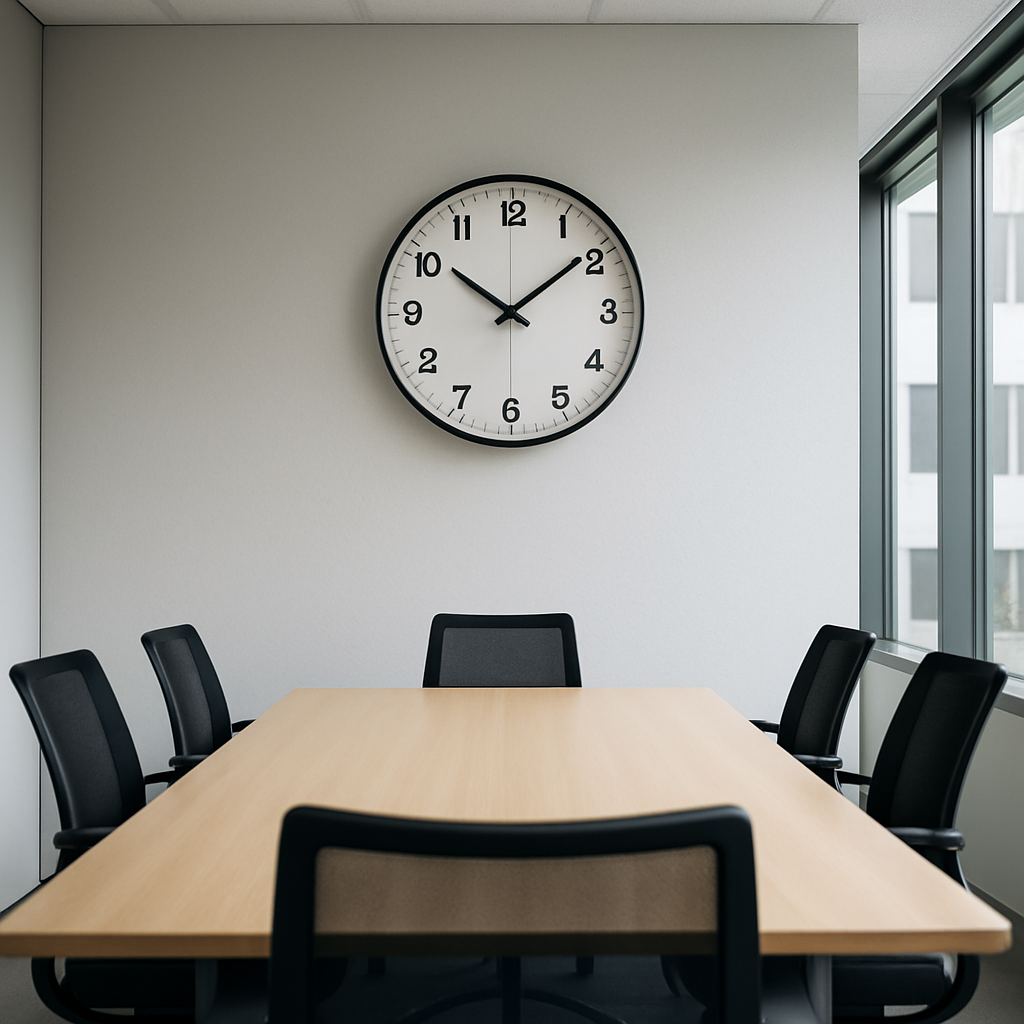
Start with viewing distance. A small clock that looks elegant up close can disappear across a meeting table. Large numerals, strong contrast, and a simple face usually matter more than decorative details when the clock is meant for shared rooms.
Movement noise deserves attention. A ticking clock may be harmless in a hallway and distracting in a quiet conference room, recording room, coaching office, or focus space. Silent sweep or quiet movement can make the room feel calmer during long discussions.
Battery access and mounting are practical details. The clock should hang securely, stay level, and allow battery changes without turning maintenance into a ladder project. If the room is frequently rearranged, placement should avoid glare, projector screens, and camera sight lines.
Style still matters because conference rooms represent the office. A clock should match the room tone without becoming the focal point. Neutral frames, readable faces, and calm materials usually work better than novelty designs.
The best choice supports meeting rhythm. It is easy to read, quiet, appropriately sized, and simple to maintain. Once those basics are handled, product comparisons become much easier.
Use product comparisons only after the room layout and viewing distance are clear.
Readability
Readability matters because a conference-room wall clock has to serve people at different distances, angles, and attention levels. It is not only decoration. A useful clock helps meetings start on time, keeps presenters aware of pace, and lets people check the room schedule without pulling out a phone.
Start with viewing distance. A small clock that looks elegant up close can disappear across a meeting table. Large numerals, strong contrast, and a simple face usually matter more than decorative details when the clock is meant for shared rooms.
Movement noise deserves attention. A ticking clock may be harmless in a hallway and distracting in a quiet conference room, recording room, coaching office, or focus space. Silent sweep or quiet movement can make the room feel calmer during long discussions.
Battery access and mounting are practical details. The clock should hang securely, stay level, and allow battery changes without turning maintenance into a ladder project. If the room is frequently rearranged, placement should avoid glare, projector screens, and camera sight lines.
Style still matters because conference rooms represent the office. A clock should match the room tone without becoming the focal point. Neutral frames, readable faces, and calm materials usually work better than novelty designs.
The best choice supports meeting rhythm. It is easy to read, quiet, appropriately sized, and simple to maintain. Once those basics are handled, product comparisons become much easier.
Prioritize visibility, quiet movement, and maintenance access before style.
Quiet Movement
Quiet Movement matters because a conference-room wall clock has to serve people at different distances, angles, and attention levels. It is not only decoration. A useful clock helps meetings start on time, keeps presenters aware of pace, and lets people check the room schedule without pulling out a phone.
Start with viewing distance. A small clock that looks elegant up close can disappear across a meeting table. Large numerals, strong contrast, and a simple face usually matter more than decorative details when the clock is meant for shared rooms.
Movement noise deserves attention. A ticking clock may be harmless in a hallway and distracting in a quiet conference room, recording room, coaching office, or focus space. Silent sweep or quiet movement can make the room feel calmer during long discussions.
Battery access and mounting are practical details. The clock should hang securely, stay level, and allow battery changes without turning maintenance into a ladder project. If the room is frequently rearranged, placement should avoid glare, projector screens, and camera sight lines.
Style still matters because conference rooms represent the office. A clock should match the room tone without becoming the focal point. Neutral frames, readable faces, and calm materials usually work better than novelty designs.
The best choice supports meeting rhythm. It is easy to read, quiet, appropriately sized, and simple to maintain. Once those basics are handled, product comparisons become much easier.
Prioritize visibility, quiet movement, and maintenance access before style.
Battery Access
Battery Access matters because a conference-room wall clock has to serve people at different distances, angles, and attention levels. It is not only decoration. A useful clock helps meetings start on time, keeps presenters aware of pace, and lets people check the room schedule without pulling out a phone.
Start with viewing distance. A small clock that looks elegant up close can disappear across a meeting table. Large numerals, strong contrast, and a simple face usually matter more than decorative details when the clock is meant for shared rooms.
Movement noise deserves attention. A ticking clock may be harmless in a hallway and distracting in a quiet conference room, recording room, coaching office, or focus space. Silent sweep or quiet movement can make the room feel calmer during long discussions.
Battery access and mounting are practical details. The clock should hang securely, stay level, and allow battery changes without turning maintenance into a ladder project. If the room is frequently rearranged, placement should avoid glare, projector screens, and camera sight lines.
Style still matters because conference rooms represent the office. A clock should match the room tone without becoming the focal point. Neutral frames, readable faces, and calm materials usually work better than novelty designs.
The best choice supports meeting rhythm. It is easy to read, quiet, appropriately sized, and simple to maintain. Once those basics are handled, product comparisons become much easier.
Prioritize visibility, quiet movement, and maintenance access before style.
Style Match
Style Match matters because a conference-room wall clock has to serve people at different distances, angles, and attention levels. It is not only decoration. A useful clock helps meetings start on time, keeps presenters aware of pace, and lets people check the room schedule without pulling out a phone.
Start with viewing distance. A small clock that looks elegant up close can disappear across a meeting table. Large numerals, strong contrast, and a simple face usually matter more than decorative details when the clock is meant for shared rooms.
Movement noise deserves attention. A ticking clock may be harmless in a hallway and distracting in a quiet conference room, recording room, coaching office, or focus space. Silent sweep or quiet movement can make the room feel calmer during long discussions.
Battery access and mounting are practical details. The clock should hang securely, stay level, and allow battery changes without turning maintenance into a ladder project. If the room is frequently rearranged, placement should avoid glare, projector screens, and camera sight lines.
Style still matters because conference rooms represent the office. A clock should match the room tone without becoming the focal point. Neutral frames, readable faces, and calm materials usually work better than novelty designs.
The best choice supports meeting rhythm. It is easy to read, quiet, appropriately sized, and simple to maintain. Once those basics are handled, product comparisons become much easier.
Prioritize visibility, quiet movement, and maintenance access before style.
Meeting Rhythm
Meeting Rhythm matters because a conference-room wall clock has to serve people at different distances, angles, and attention levels. It is not only decoration. A useful clock helps meetings start on time, keeps presenters aware of pace, and lets people check the room schedule without pulling out a phone.
Start with viewing distance. A small clock that looks elegant up close can disappear across a meeting table. Large numerals, strong contrast, and a simple face usually matter more than decorative details when the clock is meant for shared rooms.
Movement noise deserves attention. A ticking clock may be harmless in a hallway and distracting in a quiet conference room, recording room, coaching office, or focus space. Silent sweep or quiet movement can make the room feel calmer during long discussions.
Battery access and mounting are practical details. The clock should hang securely, stay level, and allow battery changes without turning maintenance into a ladder project. If the room is frequently rearranged, placement should avoid glare, projector screens, and camera sight lines.
Style still matters because conference rooms represent the office. A clock should match the room tone without becoming the focal point. Neutral frames, readable faces, and calm materials usually work better than novelty designs.
The best choice supports meeting rhythm. It is easy to read, quiet, appropriately sized, and simple to maintain. Once those basics are handled, product comparisons become much easier.
Prioritize visibility, quiet movement, and maintenance access before style.
One-room test before buying
Stand at the farthest seat, near the doorway, beside the screen, and at the presenter position. If the time cannot be read quickly from those normal spots, the clock is too small, too low contrast, or placed poorly. The right clock should help people stay aware of time without interrupting the meeting.
Check glare at different times of day. Glass covers can reflect windows, screens, or ceiling lights. A clock that is readable in the morning may wash out under afternoon sun or projector light, so placement matters as much as size.
Finally, assign battery replacement to a routine. A dead clock in a meeting room makes the space feel neglected. A simple maintenance habit protects the small but important role the clock plays.
For product comparisons, read LeStallion’s 7 Best Wall Clocks for Conference Rooms.
Previous cloud reference: the Backblaze desk-clock cluster is here: desk clocks for stylish timekeeping.