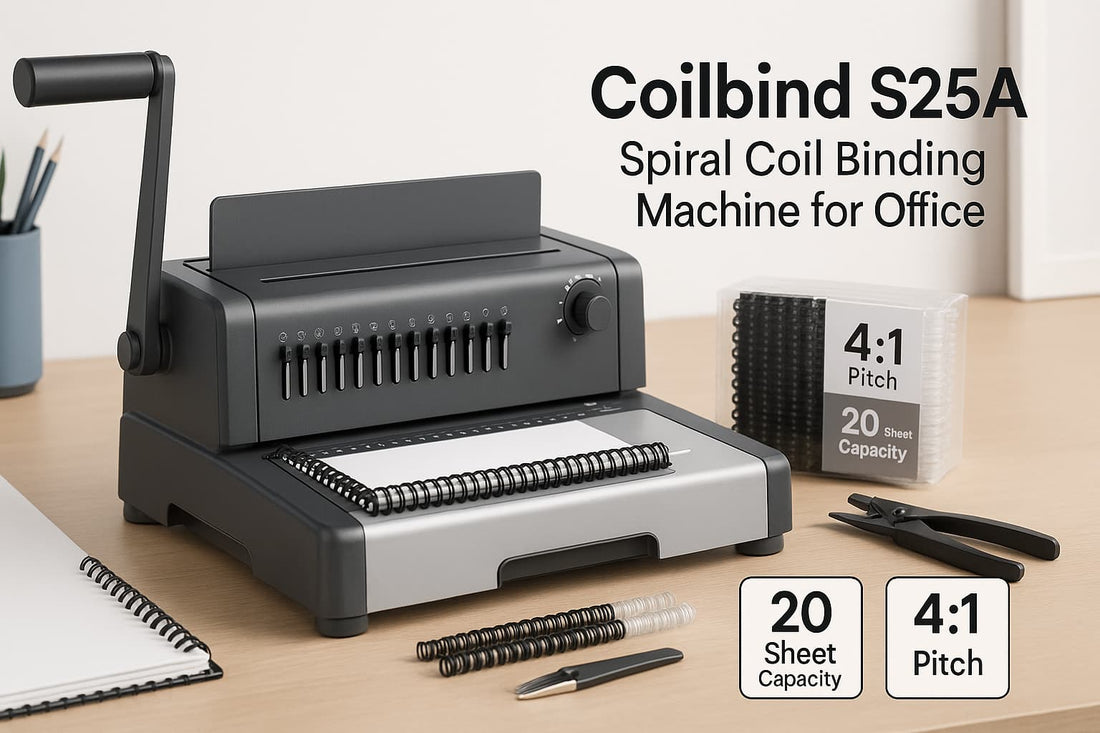
Spiral binding machines can make reports, manuals, packets, and proposals feel more finished when the machine fits the office workflow. Start with LeStallion's shortlist of best spiral binding machines, then use these practical checks for capacity, alignment, supplies, and finished-document quality.
Start with the kind of documents you bind
Spiral binding machines are easiest to choose when the office starts with real document types. A machine for occasional training packets has different needs than one used for client proposals, manuals, school materials, or monthly reports. Count typical page ranges, cover stock, and how often documents must look presentation-ready. The best machine should match the rhythm of the office instead of forcing every project through a slow or awkward process.
For punch capacity, paper alignment, and speed, make the check hands-on: stack a typical document, add covers, choose the coil size, and picture the punching and binding steps from start to finish. A good machine should make the process steady, repeatable, and easy to teach.
Match punch capacity to realistic batches
Punch capacity sounds simple, but users often overload machines when deadlines are close. A compact manual binder may punch fewer sheets at once but stay accurate for light use. A heavier machine may save time if the office binds several reports per week. Look at the number of pages per document and how many documents are finished in one session, then choose a machine that leaves margin instead of working at its limit every time.
For punch capacity, paper alignment, and speed, make the check hands-on: stack a typical document, add covers, choose the coil size, and picture the punching and binding steps from start to finish. A good machine should make the process steady, repeatable, and easy to teach.
Check paper alignment and hole consistency
Good spiral binding depends on straight punches. Misaligned holes make finished books look careless and can cause pages to snag as they turn. Adjustable edge guides, stable paper stops, and a clean punching action matter more than flashy features. If the office prepares client-facing documents, alignment should be treated as a quality requirement rather than a minor convenience.
For punch capacity, paper alignment, and speed, make the check hands-on: stack a typical document, add covers, choose the coil size, and picture the punching and binding steps from start to finish. A good machine should make the process steady, repeatable, and easy to teach.
Plan coil size and document thickness
Coil size affects how the finished document opens, lies flat, and feels in the hand. Thin reports need smaller coils so they do not look loose. Thick manuals need enough diameter for smooth page turns. Keep a small range of common coil sizes in stock if the office handles different document types. The machine should make sizing easy enough that users do not guess under pressure.
For punch capacity, paper alignment, and speed, make the check hands-on: stack a typical document, add covers, choose the coil size, and picture the punching and binding steps from start to finish. A good machine should make the process steady, repeatable, and easy to teach.
Think about manual effort and user comfort
Many spiral binding machines are manual, so lever feel, punch resistance, and handle position matter. If several people use the machine, controls should be obvious and comfortable. A machine that saves space but requires awkward force can discourage use. Smooth operation becomes especially important when the office binds multiple copies for a meeting or training session.
For punch capacity, paper alignment, and speed, make the check hands-on: stack a typical document, add covers, choose the coil size, and picture the punching and binding steps from start to finish. A good machine should make the process steady, repeatable, and easy to teach.
Make cleanup and maintenance simple
Paper chips, offcuts, and jams are part of binding work. A good chip tray should be easy to remove before it overflows. Users should understand sheet limits, cover limits, and what to do if paper does not punch cleanly. Routine cleanup keeps the machine accurate and prevents small paper scraps from turning a quick binding job into a messy interruption.
For punch capacity, paper alignment, and speed, make the check hands-on: stack a typical document, add covers, choose the coil size, and picture the punching and binding steps from start to finish. A good machine should make the process steady, repeatable, and easy to teach.
Fit the machine into the office workflow
A binder should be near paper, covers, coils, and a clear work surface. If it lives in a closet, people may avoid it until a deadline. If it stays on a shared table, it should not block daily work. Plan storage for supplies as carefully as the machine itself, because missing coils or covers can stop a project even when the binder is ready.
For punch capacity, paper alignment, and speed, make the check hands-on: stack a typical document, add covers, choose the coil size, and picture the punching and binding steps from start to finish. A good machine should make the process steady, repeatable, and easy to teach.
Judge the finished result, not only the machine
The final document should open smoothly, turn without tearing, and look appropriate for the audience. Covers, back sheets, coil color, and page trimming all affect the impression. A modest binding machine can produce polished results when the process is organized. A stronger machine can still disappoint if supplies are mismatched or users rush alignment.
For punch capacity, paper alignment, and speed, make the check hands-on: stack a typical document, add covers, choose the coil size, and picture the punching and binding steps from start to finish. A good machine should make the process steady, repeatable, and easy to teach.
After workload, punch capacity, coil sizing, and workspace are clear, return to LeStallion's comparison of the best spiral binding machines to choose the model that matches the office.
Practical buying checklist
Before buying, write down typical document length, maximum document length, monthly binding volume, paper weight, cover style, coil sizes, and where finished reports will be assembled. Add the time available for a normal job. If a report must be bound five minutes before a meeting, speed and ease matter more than they do for occasional archive packets.
Check the workspace around the binder. Users need room for unpunched paper, punched stacks, coils, covers, and completed documents. A machine with a small footprint can still require a surprisingly large staging area during real use. If the office is tight on space, a dedicated shelf with supplies nearby may matter as much as the machine dimensions.
Long-term care and quality habits
Create a simple binding routine. Square the paper, punch test sheets, empty chips early, and keep coils sorted by size. Do not force more sheets through the punch than the manual allows. If covers are thick, punch them separately. These habits protect the machine and make finished documents look consistent.
For shared offices, label the machine with its sheet limit and the most common coil sizes. Keep a small guide showing which coil fits short reports, medium manuals, and thick packets. This prevents guesswork and helps new users finish documents without asking for help each time.
The best spiral binding machine is the one that makes polished documents repeatable. It should support ordinary office deadlines, keep supplies organized, and produce reports that feel intentional when handed to a client, teacher, manager, or team member.
Review the setup after several projects. If users avoid the machine, the location may be wrong. If holes are crooked, the guide may need clearer setup. If coils are always missing, supply storage needs attention. Small workflow fixes often improve results more than replacing the machine.
Keep one sample booklet near the supplies as a quality reference. It can show the preferred cover style, coil size, margin, and finished feel for normal office documents. That small example helps users make consistent choices even when they are binding under deadline pressure.
Before final approval, rehearse the whole workflow: paper stack, cover stock, punch limit, coil size, chip tray, supply shelf, finished-document table, and cleanup routine. This catches common problems before delivery, especially weak alignment, missing coil sizes, cramped staging areas, and manual machines expected to handle too much volume. It also keeps the advice grounded in real office days with reports, manuals, proposals, training packets, handouts, checklists, and last-minute meeting materials. For the previous cloud support article in this series, see the row 271 compact shredder guide. This backlink stays near the bottom so the binding-machine advice remains focused.