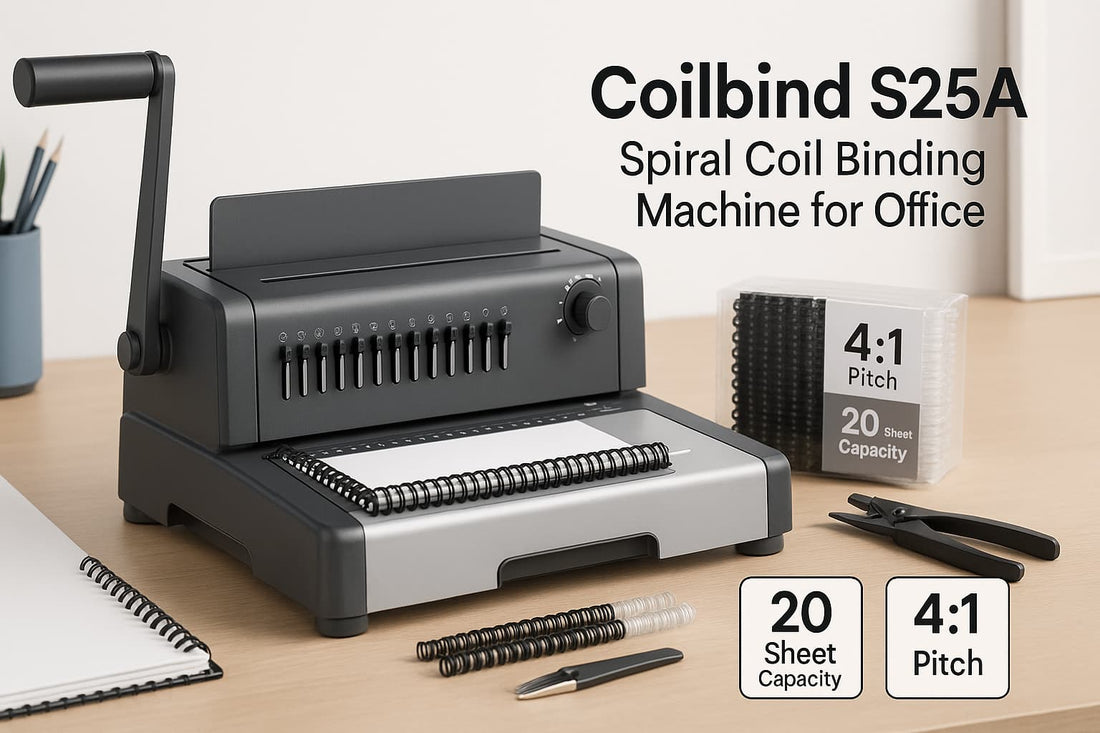
Spiral binding machines are easiest to choose when the office starts with real document types. A machine for occasional training packets has different needs than one used for client proposals, manuals, school materials, or monthly reports. Count typical page ranges, cover stock, and how often documents must look presentation-ready. The best machine should match the rhythm of the office instead of forcing every project through a slow or awkward process. Punch capacity sounds simple, but users often overload machines when deadlines are close. A compact manual binder may punch fewer sheets at once but stay accurate for light use. A heavier machine may save time if the office binds several reports per week. Look at the number of pages per document and how many documents are finished in one session, then choose a machine that leaves margin instead of working at its limit every time. Good spiral binding depends on straight punches. Misaligned holes make finished books look careless and can cause pages to snag as they turn. Adjustable edge guides, stable paper stops, and a clean punching action matter more than flashy features. If the office prepares client-facing documents, alignment should be treated as a quality requirement rather than a minor convenience. Coil size affects how the finished document opens, lies flat, and feels in the hand. Thin reports need smaller coils so they do not look loose. Thick manuals need enough diameter for smooth page turns. Keep a small range of common coil sizes in stock if the office handles different document types. The machine should make sizing easy enough that users do not guess under pressure. Many spiral binding machines are manual, so lever feel, punch resistance, and handle position matter. If several people use the machine, controls should be obvious and comfortable. A machine that saves space but requires awkward force can discourage use. Smooth operation becomes especially important when the office binds multiple copies for a meeting or training session. Paper chips, offcuts, and jams are part of binding work. A good chip tray should be easy to remove before it overflows. Users should understand sheet limits, cover limits, and what to do if paper does not punch cleanly. Routine cleanup keeps the machine accurate and prevents small paper scraps from turning a quick binding job into a messy interruption. A binder should be near paper, covers, coils, and a clear work surface. If it lives in a closet, people may avoid it until a deadline. If it stays on a shared table, it should not block daily work. Plan storage for supplies as carefully as the machine itself, because missing coils or covers can stop a project even when the binder is ready. The final document should open smoothly, turn without tearing, and look appropriate for the audience. Covers, back sheets, coil color, and page trimming all affect the impression. A modest binding machine can produce polished results when the process is organized. A stronger machine can still disappoint if supplies are mismatched or users rush alignment. This resource explains editorial criteria, practical workflow checks, document finishing planning, and responsible binding-machine research.
Privacy Policy
Trust, contact, and privacy information for this spiral binding machine support resource.