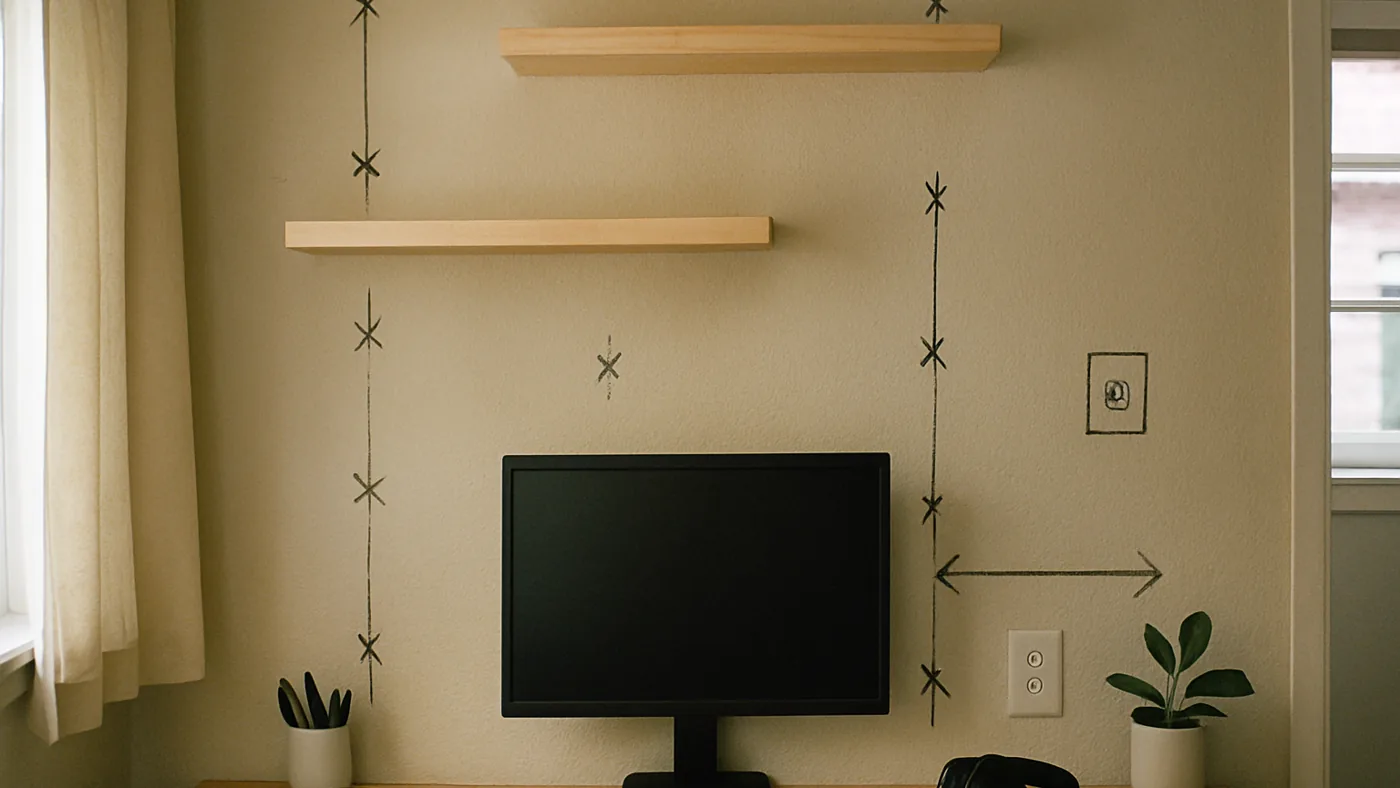
Why stud layout before shelves matters
This page focuses on how to plan shelf locations around studs, anchors, outlets, and monitor height. It uses a simpler article layout while the main guide carries the broader buying advice.
Weight capacity deserves plain language. A shelf can be rated generously in a listing, but the real result depends on the wall, the anchors, the bracket design, the screw placement, and what the user puts on the shelf six months later. Office shelves collect weight slowly. One binder becomes three. A small plant gets a ceramic pot. A printer paper stack becomes a permanent object. A useful buying guide should help readers think about those quiet additions before choosing a shallow decorative shelf for real storage.
Begin with the real desk wall
The first pass is practical. I mark the desk width, monitor height, chair path, outlet location, and the area where elbows naturally move. Those marks tell me where shelves should not go. After that, the wall starts to make more sense. The best shelf location is often slightly calmer than the most dramatic one: reachable from the chair, high enough to keep the desk clear, and far enough from the monitor that it does not feel like a heavy shelf is hanging over the workday.
Style still matters because wall shelves sit at eye level. A warm wood shelf can soften a white desk. A black metal bracket can repeat the line of a monitor arm. A pale shelf can disappear into the wall and make a small office feel wider. The safest look usually comes from repetition: a few storage boxes in one finish, a limited number of display items, and enough empty space that the shelf does not become a second junk drawer mounted on the wall.
Think about weight creep
Weight capacity deserves plain language. A shelf can be rated generously in a listing, but the real result depends on the wall, the anchors, the bracket design, the screw placement, and what the user puts on the shelf six months later. Office shelves collect weight slowly. One binder becomes three. A small plant gets a ceramic pot. A printer paper stack becomes a permanent object. A useful buying guide should help readers think about those quiet additions before choosing a shallow decorative shelf for real storage.
The most helpful shortlist is not the one with the most shelves. It is the one that matches the wall type, load expectation, desk size, and habits of the person using the room. When those basics are clear, a product list becomes easier to read. You can ignore options that are too deep, too light-duty, too visually loud, or too awkward to install around the actual desk wall.
Keep the office calm
Style still matters because wall shelves sit at eye level. A warm wood shelf can soften a white desk. A black metal bracket can repeat the line of a monitor arm. A pale shelf can disappear into the wall and make a small office feel wider. The safest look usually comes from repetition: a few storage boxes in one finish, a limited number of display items, and enough empty space that the shelf does not become a second junk drawer mounted on the wall.
My final check is simple: imagine a normal Tuesday. The laptop is open, the mug is nearby, the chair is pulled back, and the shelf has real objects on it. If the shelf still helps the room feel clearer in that picture, it belongs on the shortlist. If it only works when perfectly styled for a photo, it may be decoration pretending to be storage.
Use this as a filter
The most helpful shortlist is not the one with the most shelves. It is the one that matches the wall type, load expectation, desk size, and habits of the person using the room. When those basics are clear, a product list becomes easier to read. You can ignore options that are too deep, too light-duty, too visually loud, or too awkward to install around the actual desk wall.
Floating shelves can make an office wall feel more intentional, but they also make every measurement visible. A shelf that is two inches too high becomes awkward to reach. A shelf that is too deep can cast a shadow over the desk. A shelf that looks beautiful in an empty product photo may feel busy once notebooks, chargers, small bins, and paper trays land on it. I like to treat floating shelves as part of the work surface, not as decoration added after the room is finished.
Return to the main guide
After this issue is settled, return to the main floating shelves office guide and compare shelves with better questions.
The first pass is practical. I mark the desk width, monitor height, chair path, outlet location, and the area where elbows naturally move. Those marks tell me where shelves should not go. After that, the wall starts to make more sense. The best shelf location is often slightly calmer than the most dramatic one: reachable from the chair, high enough to keep the desk clear, and far enough from the monitor that it does not feel like a heavy shelf is hanging over the workday.
Long-term placement notes
The part people often underestimate is how a shelf changes after the first week. At first it may hold one plant, two books, and a small tray. Later it becomes the place where spare cables, notebooks, camera batteries, tape, receipts, and small office tools collect. That is why I prefer shelves that are slightly calmer than the maximum decorative option. A shelf with enough depth for a storage box but not so much depth that it hangs over the monitor usually ages better in a working room.
Light also changes the decision. A shelf mounted near a window can cast a line across the desk during part of the day, and a dark bracket can feel heavier under evening lamps. Before drilling, it helps to hold painter tape on the wall at the planned shelf height and live with it for a day. If the tape line already feels distracting while sitting at the desk, the final shelf will probably feel heavier once objects are added.
The best office shelf has a quiet job. It keeps frequent objects close, lifts visual clutter away from the desktop, and gives the wall a finished shape without asking for constant styling. If the shelf needs perfect arranging to look acceptable, it may not be the right shelf for a real office routine. A small amount of open space, a repeated finish, and realistic weight planning usually do more for the room than another decorative object.
Final room-read test
One more useful test is to photograph the desk wall from the doorway, not from directly in front of the shelf. The doorway view shows whether the shelf supports the whole office or only looks good in a close crop. If the room still feels balanced, the shelf is probably doing the right amount of work.
Quick checklist
- Mark the desk width and chair movement.
- Confirm wall type and likely anchor method.
- Estimate future weight, not only current weight.
- Choose a depth that does not crowd the monitor zone.
- Return to the main guide with these limits in mind.
FAQ
What is the first check?
Start with the wall, desk position, and the objects the shelf must hold.
Should this page link to product reviews?
This support page points back to the main floating-shelves guide so the buying decision stays centralized.
How do I keep shelves from looking crowded?
Limit object types, repeat finishes, and leave visible empty space.
What if I rent?
Check lease limits and repair expectations before drilling.
What usually goes wrong?
People pick a style before checking depth, reach, anchors, and normal desk movement.