Accounting and Tax Workflow Fit
Use this section as a practical lens while comparing desktop calculators for offices, counters, bookkeeping desks, and small-business admin routines.
See the current product shortlist in 6 Best Desktop Calculators for Businesses when you are ready to compare models.
Key Feel. A business calculator is used in short repeated bursts, so key spacing, key height, and tactile feedback matter more than the product photo suggests. For accounting and tax workflow fit, the useful test is whether the calculator makes business math faster and calmer without pulling people into extra software.
Key Feel check. Test whether common sequences can be entered without looking down for every key.
Display Clarity. A clear angled display reduces rechecking, especially when totals are reviewed beside invoices, purchase orders, receipts, or inventory sheets. For accounting and tax workflow fit, the useful test is whether the calculator makes business math faster and calmer without pulling people into extra software.
Display Clarity check. Read the display from the normal chair position and from the side of the desk.
Workflow Fit. Accounting, tax prep, expense review, retail counters, and admin desks need different functions. The useful model matches the routine instead of adding confusing buttons. For accounting and tax workflow fit, the useful test is whether the calculator makes business math faster and calmer without pulling people into extra software.
Workflow Fit check. List the calculations repeated every week before choosing extra features.
Review Habits. Some teams need print tape or check-and-correct memory because one wrong total can travel into a quote, ledger, or report. For accounting and tax workflow fit, the useful test is whether the calculator makes business math faster and calmer without pulling people into extra software.
Review Habits check. Decide whether visible audit trails matter for this desk.
Desk Behavior. Size, tilt, slip resistance, and button noise affect whether the calculator feels like a steady office tool or another awkward accessory. For accounting and tax workflow fit, the useful test is whether the calculator makes business math faster and calmer without pulling people into extra software.
Desk Behavior check. Place it beside the keyboard, paperwork, and monitor to check reach.
Reliability. Batteries, solar backup, memory, decimal settings, and durable keys keep the calculator trusted through repetitive business use. For accounting and tax workflow fit, the useful test is whether the calculator makes business math faster and calmer without pulling people into extra software.
Reliability check. Choose boring dependability over novelty when several people share the desk.
Morning admin pass. A calculator often sits beside coffee, receipts, shipping slips, invoices, and handwritten notes. A practical model helps clear those small jobs quickly, before the worker opens more complex software.
Two-screen discipline. Even when spreadsheets handle final records, a separate calculator can keep quick checks away from distracting browser tabs. The value is not replacing accounting tools; it is supporting simple verification.
Shared counter reality. At reception, retail, warehouse, or billing counters, the calculator should be obvious to use. Decimal selectors, tax keys, and memory functions need labels that occasional users understand.
Error recovery. Good calculators make correction simple. Backspace, check-and-correct, grand total, or print tape can prevent a small typing error from forcing the whole calculation to be restarted.
Quiet operation. Button sound can matter in open offices, call-heavy rooms, and front desks. A loud calculator may be fine in a back office but distracting beside customer calls.
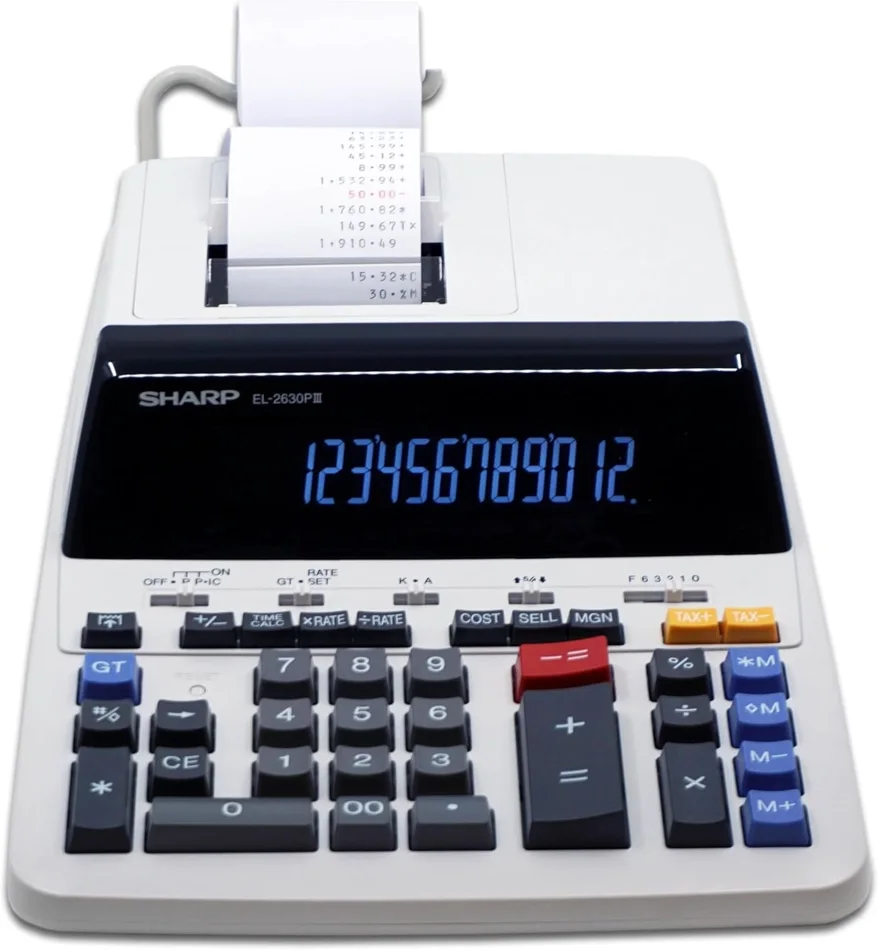
Paper handling. Printing calculators add a roll, ink, and desk footprint, but they can be useful when approvals require a visible calculation trail. Non-printing models stay cleaner and smaller.
Power planning. Solar-only models can struggle in dim rooms, while plug-in printing calculators need a nearby outlet. Battery access should be simple enough that the tool does not disappear when it dies.
Training fit. For teams, the best calculator is often the one everyone can learn quickly. A complex financial model may be powerful but wasted if staff only need tax, margin, subtotal, and grand total.
Manager review. Managers may use calculators differently from bookkeepers: checking quotes, labor totals, small budgets, or order quantities. The right desk model supports these quick checks without opening a full workbook.
Long-term trust. Keys that wobble, displays that fade, or decimal switches that move accidentally can make a calculator feel unreliable. Business desks need tools that keep the same settings and feel consistent each day.
Cleaning and placement. Receipts, dust, and paper scraps collect around desk tools. A calculator with simple surfaces, stable feet, and enough weight is easier to keep in the same place and wipe down.
Final buying lens. A business calculator should save attention. If it makes simple math faster, keeps errors visible, and fits the desk without training drama, it is doing the job.
Final fit note. Before buying, rehearse one normal workday: total a receipt stack, check a quote, correct an entry, review a subtotal, and put the calculator back in its desk position. The right model should support that routine without drama.
Monthly close behavior. A desktop calculator becomes especially useful during monthly close, invoice matching, petty-cash review, and end-of-week reporting. Those jobs create small but important math checks that may not justify opening a full spreadsheet every time. The calculator should make the repeated work feel orderly: clear number entry, easy correction, stable decimal settings, and a display that does not require leaning forward.
Receipt stack rhythm. Many business desks still handle mixed paper and digital records. A calculator should sit comfortably beside receipt stacks, purchase orders, packing slips, and printed quotes. If the keys are cramped or the display is too flat, the user may slow down, re-enter totals, or move the calculator around the desk. A steady footprint and readable angle are small details that protect attention during repetitive admin work.
Approval trail thinking. Some offices only need quick math; others need a visible trail for approvals. That difference matters before choosing a printing calculator, a check-and-correct model, or a simple desktop unit. Print tape can help when someone else reviews the total later, but it also adds paper, supplies, and desk noise. The best choice fits the documentation habit that already exists.
Shared desk standards. In a shared workplace, the calculator should not depend on one expert user. Tax keys, margin keys, memory functions, decimal switches, and rounding controls should be understandable enough that a backup worker can use the tool without changing settings by accident. A business calculator is more reliable when the team can keep it consistent.
Speed without shortcuts. The goal is not rushing financial work. It is reducing friction around routine checks so people can slow down where judgment matters. Comfortable keys, visible totals, and simple correction support careful work because they prevent tiny interruptions from turning into bigger errors. A calculator that feels boring, clear, and predictable is often the most professional choice.
Desk ecosystem fit. Compare the calculator with the full desk setup: keyboard, mouse, monitor stand, paperwork tray, phone, label printer, and notebook. A model that looks compact online may still be awkward if the desk is narrow or if paperwork needs to slide under the display. The right calculator has a place where it can remain ready without crowding the main work area.
Replacement planning. Businesses should also think about replacement. If a calculator will be used by several people every day, choose a model or category that can be replaced without retraining the team. Consistent layout, durable keys, common batteries or plug type, and familiar functions make future replacement easier than chasing unusual features.
Procurement practicality. A calculator may be a small purchase, but business desks rely on it in surprisingly visible moments: checking a customer quote, confirming tax on an order, comparing supplier totals, or preparing a manager approval. Good procurement favors models that are easy to replace, easy to explain, and unlikely to break the team’s rhythm. If several desks need the same tool, consistency can matter more than having the most advanced feature list.
Real work confidence. The best desktop calculator creates confidence during ordinary work. The user should know where the decimal is set, whether memory is active, how to correct a wrong digit, and how to review a total before it is written into another system. That confidence is what separates a dependable office tool from a gadget that looks useful but causes hesitation.
Paper and screen balance. Many businesses now split work between paper notes, browser tabs, spreadsheets, and accounting software. A desktop calculator earns its space when it bridges those moments cleanly. It lets someone verify a quick total beside the paperwork, then move the confirmed number into the main system. The calculator should support that handoff without creating another source of confusion.
End-of-day reset. Before the desk is closed, the calculator should be easy to reset, store, or leave ready for tomorrow. Check whether settings remain predictable, whether the display turns off sensibly, whether print paper is protected, and whether the unit stays clean around the keys. A good business calculator supports both the rush of the day and the quiet reset afterward.
Business math decision reminder
Return to the LeStallion desktop calculator review after checking key feel, display, review trail, desk placement, power, and daily workflow fit.
Related cloud-chain reference: the previous support page covered desk clocks for productivity, another office guide kept near the end of the research path.