Laptop Lock Slots and Compatibility
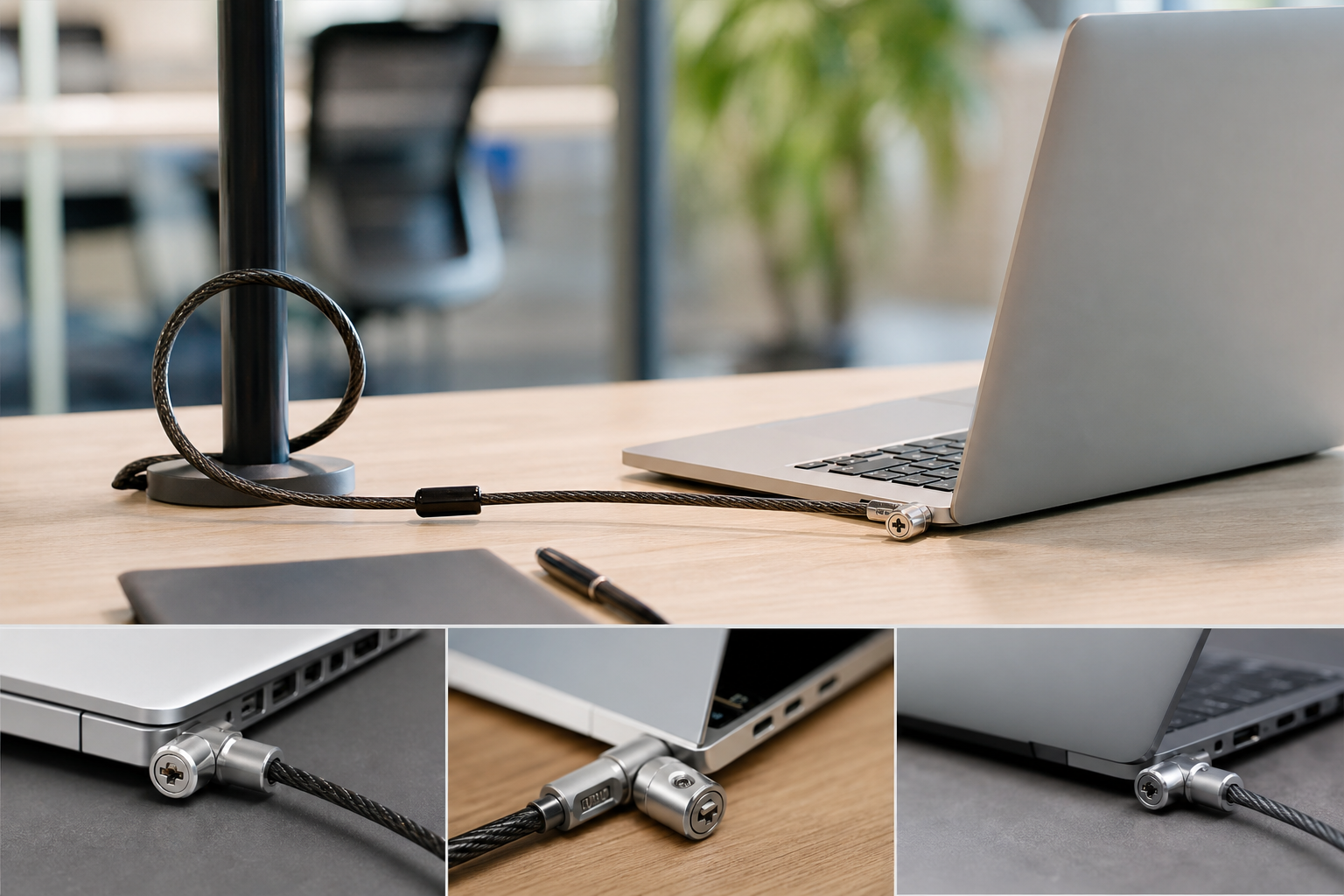
This supporting guide explains laptop lock slots and compatibility as part of a practical laptop-security routine for offices and shared workspaces.
What to decide first
Laptop Lock Slots and Compatibility is easy to overlook because laptop security often feels like a facilities issue rather than a daily work habit. In real offices, laptops move between desks, meeting rooms, reception areas, storage shelves, training tables, and home-office bags. A cable lock will not solve every security problem, but it can create a useful layer of friction when devices are left in predictable places.
The best setup begins with the environment. A private office, shared desk bank, coworking zone, classroom, repair bench, and front counter all need different habits. Some teams need locks mainly for after-hours storage. Others need them during events, visitor days, or hot-desking periods when people step away for calls and meetings.
Compatibility is the first practical check. Modern laptops may use different lock slots, thinner chassis, or adapters. A lock that does not fit cleanly will either damage confidence or stay in a drawer. Before buying in bulk, test one unit with the actual laptop models, docking positions, desk edges, and anchor points used by the team.
Key management matters as much as cable strength. A keyed lock can be simple, but spare keys need a controlled home. A combination lock removes key storage but requires a reset process and a rule for documenting codes. Shared spaces should avoid informal systems where one person remembers the code and everyone else guesses.
Anchoring is the quiet detail that decides whether a lock is useful. A cable wrapped around a flimsy object is mostly symbolic. Look for stable desk frames, built-in anchor plates, security loops, or heavy fixtures that cannot be moved easily. Keep the cable path tidy so it does not create a snag hazard for chairs, bags, or cleaners.
A good office routine also explains when locks should be used. If the rule is vague, people wait until something feels risky. Clear triggers work better: use locks overnight, during public events, in shared training rooms, at reception counters, and whenever devices are staged before deployment. Simple rules are easier to remember than long policies.
Cable locks should support, not replace, broader device protection. Asset tags, account passwords, device encryption, remote wipe, visitor rules, and locked storage all still matter. The cable lock is one visible layer in a larger habit: reducing casual removal, making ownership obvious, and helping staff pause before leaving equipment exposed.
Review the system every few months. Remove broken locks, replace frayed cables, update the key list, and check whether new laptop models still fit the old lock heads. Security equipment gets weaker when nobody owns the maintenance routine. A small recurring review keeps the system practical instead of performative.
Office routine notes
Routine planning for laptop lock slots and compatibility is easy to overlook because laptop security often feels like a facilities issue rather than a daily work habit. In real offices, laptops move between desks, meeting rooms, reception areas, storage shelves, training tables, and home-office bags. A cable lock will not solve every security problem, but it can create a useful layer of friction when devices are left in predictable places.
The best setup begins with the environment. A private office, shared desk bank, coworking zone, classroom, repair bench, and front counter all need different habits. Some teams need locks mainly for after-hours storage. Others need them during events, visitor days, or hot-desking periods when people step away for calls and meetings.
Compatibility is the first practical check. Modern laptops may use different lock slots, thinner chassis, or adapters. A lock that does not fit cleanly will either damage confidence or stay in a drawer. Before buying in bulk, test one unit with the actual laptop models, docking positions, desk edges, and anchor points used by the team.
Key management matters as much as cable strength. A keyed lock can be simple, but spare keys need a controlled home. A combination lock removes key storage but requires a reset process and a rule for documenting codes. Shared spaces should avoid informal systems where one person remembers the code and everyone else guesses.
Anchoring is the quiet detail that decides whether a lock is useful. A cable wrapped around a flimsy object is mostly symbolic. Look for stable desk frames, built-in anchor plates, security loops, or heavy fixtures that cannot be moved easily. Keep the cable path tidy so it does not create a snag hazard for chairs, bags, or cleaners.
A good office routine also explains when locks should be used. If the rule is vague, people wait until something feels risky. Clear triggers work better: use locks overnight, during public events, in shared training rooms, at reception counters, and whenever devices are staged before deployment. Simple rules are easier to remember than long policies.
Cable locks should support, not replace, broader device protection. Asset tags, account passwords, device encryption, remote wipe, visitor rules, and locked storage all still matter. The cable lock is one visible layer in a larger habit: reducing casual removal, making ownership obvious, and helping staff pause before leaving equipment exposed.
Review the system every few months. Remove broken locks, replace frayed cables, update the key list, and check whether new laptop models still fit the old lock heads. Security equipment gets weaker when nobody owns the maintenance routine. A small recurring review keeps the system practical instead of performative.
Return to the main cable lock security guide for the complete framework.
Extra practical notes
Keep the buying process connected to real behavior. Walk through a normal day and note where laptops sit unattended, who moves them, what furniture is nearby, and when visitors enter the room. This small observation often reveals better anchor points and clearer rules than a product page can provide.
For teams, write the routine in plain language. Explain when to lock, where spare keys live, who manages codes, and how broken locks are reported. A short routine that people follow beats a perfect security policy that nobody reads.
Finally, review the setup when laptop models change. Thin laptops, tablets, and docking stations may need different lock heads or adapters. The system should evolve with the workspace instead of staying frozen around old equipment.
Extra practical notes
Keep the buying process connected to real behavior. Walk through a normal day and note where laptops sit unattended, who moves them, what furniture is nearby, and when visitors enter the room. This small observation often reveals better anchor points and clearer rules than a product page can provide.
For teams, write the routine in plain language. Explain when to lock, where spare keys live, who manages codes, and how broken locks are reported. A short routine that people follow beats a perfect security policy that nobody reads.
Finally, review the setup when laptop models change. Thin laptops, tablets, and docking stations may need different lock heads or adapters. The system should evolve with the workspace instead of staying frozen around old equipment.
Extra practical notes
Keep the buying process connected to real behavior. Walk through a normal day and note where laptops sit unattended, who moves them, what furniture is nearby, and when visitors enter the room. This small observation often reveals better anchor points and clearer rules than a product page can provide.
For teams, write the routine in plain language. Explain when to lock, where spare keys live, who manages codes, and how broken locks are reported. A short routine that people follow beats a perfect security policy that nobody reads.
Finally, review the setup when laptop models change. Thin laptops, tablets, and docking stations may need different lock heads or adapters. The system should evolve with the workspace instead of staying frozen around old equipment.
Extra practical notes
Keep the buying process connected to real behavior. Walk through a normal day and note where laptops sit unattended, who moves them, what furniture is nearby, and when visitors enter the room. This small observation often reveals better anchor points and clearer rules than a product page can provide.
For teams, write the routine in plain language. Explain when to lock, where spare keys live, who manages codes, and how broken locks are reported. A short routine that people follow beats a perfect security policy that nobody reads.
Finally, review the setup when laptop models change. Thin laptops, tablets, and docking stations may need different lock heads or adapters. The system should evolve with the workspace instead of staying frozen around old equipment.