Start with the documents you actually discard
Start with the documents a small business actually handles. Invoices, payroll notes, vendor statements, client drafts, medical forms, and old contracts may all need different levels of care. A useful paper shredder should make secure disposal easy enough that the team uses it every day instead of letting sensitive paper pile up beside the printer.
The first test is workflow, not horsepower. Place a small stack near the shredder, feed the safe number of sheets, and notice whether the process feels clear. If the bin fills too fast, the feed slot jams, or the machine overheats after ordinary use, the office will quickly stop trusting it.
Good shredding habits also support a cleaner desk. When the machine is easy to reach, quiet enough for the room, and simple to empty, secure disposal becomes part of closing a task rather than an extra chore.
Place the shredder where secure disposal happens
Placement can decide whether a shredder becomes a habit. Put it near the printer, mail station, or accounting desk where sensitive paper naturally appears. If people have to walk across the office, documents may wait too long in trays or bags.
Noise matters in small rooms. A shredder does not need to be silent, but it should not interrupt calls or make people avoid using it during business hours. If the model is louder, create a short end-of-day shredding routine instead of leaving disposal random.
Also check the path to empty the bin. A pull-out bin is convenient only if it clears the desk and can be emptied without scattering strips or confetti. Simple access keeps maintenance from becoming the reason the shredder is ignored.
Match cut type to document sensitivity
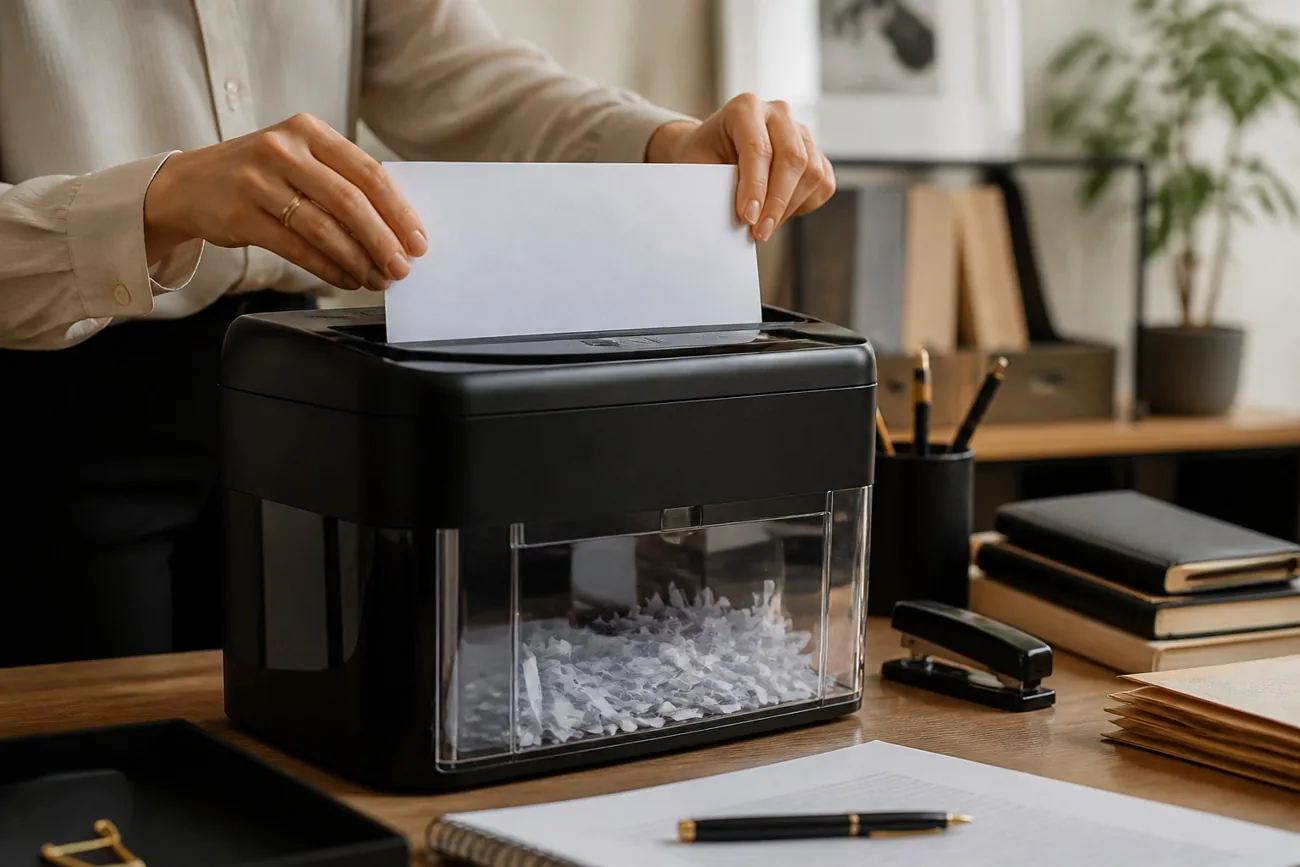
Cut type should match document sensitivity. Strip-cut models may be acceptable for low-risk drafts, but cross-cut and micro-cut options are usually better for customer details, financial records, and internal paperwork. The more sensitive the paper, the smaller the pieces should be.
Small businesses should also think about volume. A tiny personal shredder can work for occasional receipts, while a busy office may need longer runtime, larger bin capacity, and stronger jam protection. Buying too small often creates more frustration than buying carefully once.
Feed limits deserve respect. Forcing thick stacks, labels, or folded packets can shorten the machine life. A good routine uses smaller batches, removes clips when required, and gives the motor time to cool if the manual recommends it.
Make bin and runtime habits simple
Maintenance is part of document security because a jammed shredder quickly becomes a neglected shredder. Keep oil sheets or shredder oil nearby if the model requires it, and make emptying the bin a scheduled task rather than a surprise.
Watch for early warning signs: slower feeding, rougher cutting sounds, paper backing up near the slot, or a bin that triggers the full sensor too late. These small signals often appear before a major jam.
A practical shredder should be easy for more than one person to operate. Clear labels, obvious reverse controls, and a visible bin window all help teams use it correctly without asking for instructions.
Check team workflow before buying
The best buying decision balances security, volume, noise, and space. A compact unit may fit under a desk, but a shared team may need a more durable machine in a central spot. The right shredder should suit the paper flow of the office, not just the product photo.
Look at what happens after purchase. Where will replacement bags go? Who empties the bin? How often will the blades need oil? If those answers are simple, the shredder is more likely to support consistent document disposal.
Finally, treat the shredder as a small compliance habit. It cannot replace a records policy, but it can make secure cleanup easier for everyday paperwork. That is the real value for a small business.
One-week secure-disposal rehearsal
Before treating a shredder as the office solution, rehearse a normal week. On day one, collect the documents that usually sit near printers, shipping desks, and accounting folders. On day two, test a small batch and confirm the feed limit feels realistic. On day three, empty the bin and check whether cleanup is neat enough for a busy person to repeat.
By the middle of the week, the real questions become visible. Is the shredder close enough to use immediately? Does the noise bother calls? Does the bin fill before the team expects it to? Can a part-time employee understand the reverse button, safety lock, and cooldown behavior without a long explanation? These details decide whether secure disposal becomes routine.
Use the end of the week to review policy fit. Keep, scan, shred, and recycle should be clear categories. A shredder works best when the team knows which papers should never go into regular recycling and which records must be retained. The machine supports the habit, but the habit comes from a simple office process.
Buying signals worth trusting
Trust practical signals over dramatic claims. A sturdy feed slot, a realistic sheet rating, a bin that is easy to empty, and clear jam controls matter more than a long list of features. If the shredder can handle the office paper flow without stress, it is more useful than a flashy model that overheats after a few stacks.
Security level also deserves plain language. Cross-cut and micro-cut shredders reduce paper into smaller pieces, which is helpful for client, employee, and financial information. The right level depends on the risk of the documents, the volume of paper, and how much time the team can spend on disposal.
Finally, consider where the shredded paper goes. Bags, liners, recycling rules, and cleanup time all affect the experience. A shredder that is easy to maintain is more likely to stay in service and protect the business consistently.
Policy and training notes
A paper shredder works best when it is paired with a short written rule. Team members should know which papers are saved, which are scanned, which are shredded immediately, and which can go to ordinary recycling. This does not need to be complicated. A one-page disposal note near the shredder can prevent guesswork and keep sensitive documents from sitting in open bins.
Training also reduces jams and misuse. Show the team the safe sheet limit, the reverse switch, the cooldown expectation, and the documents that should not be forced through the feed slot. Remind people to remove thick clips when the manual requires it and to avoid feeding adhesive labels or heavy packets unless the shredder is built for them. These small habits protect both the machine and the business.
For small offices, the owner or office manager should also decide who checks the bin and when. A full bin can cause backing up, messy disposal, and frustration. A simple weekly check, plus an extra check after billing or payroll days, keeps the shredder available when sensitive paperwork appears. The easier the system is to repeat, the more likely the team is to follow it.
Finally, treat shredded output responsibly. Some regions or services have specific recycling rules for shredded paper, especially when bags or liners are used. Confirm the local process once, write it down, and store supplies nearby. Secure disposal should feel calm, documented, not improvised.
Small office checklist
Security
Match cut type to the sensitivity of customer, staff, and financial paperwork.
Capacity
Choose a bin size and runtime that fit the team instead of one person.
Placement
Keep the shredder near the document flow, not hidden in a storage corner.
Noise
Test whether shredding can happen without disrupting calls or front-desk work.
Jams
Prefer clear reverse controls and realistic feed limits.
Maintenance
Plan oiling, emptying, bags, and replacement timing before the bin is full.
FAQ
Is cross-cut enough for a small business?
For many routine business documents, cross-cut is a practical baseline. More sensitive records may justify micro-cut disposal.
How much capacity does a small office need?
Capacity depends on paper volume and team size. A shared office should usually choose a larger bin and longer runtime than a personal desk shredder.
Bottom line
Pick the shredder that keeps disposal secure, paper flow predictable, and the office easy to reset. For the shortlist, review the small-business paper shredder picks. For the previous support article in this related office-equipment guide series, see the previous office-equipment reference.